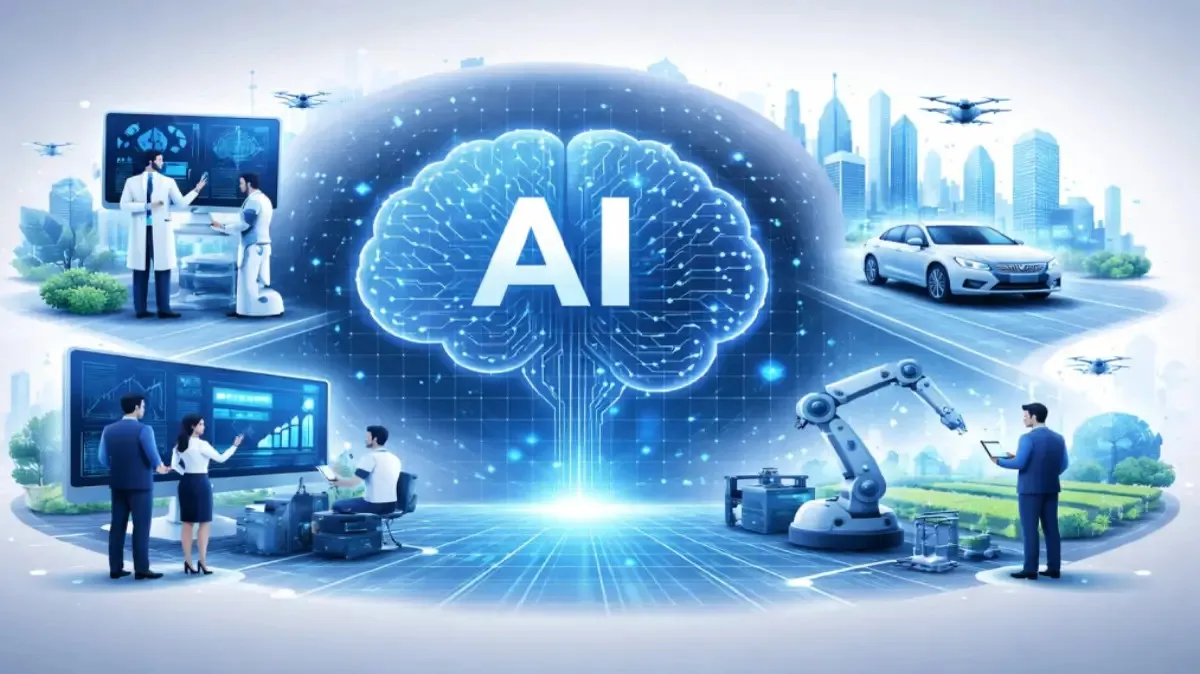
AI Technology Worldwide
Artificial Intelligence (AI) refers to the development of computer systems capable of performing tasks that typically require human intelligence, such as learning, reasoning, problem-solving, perception, and language understanding. AI has evolved from theoretical concepts in the mid-20th century to a transformative force in the 21st century, driven by advances in computing power, data availability, and algorithms like machine learning (ML) and deep learning (DL).
Historical Development
- Early Foundations (1940s–1960s): Pioneered by figures like Alan Turing (who proposed the Turing Test in 1950) and researchers at institutions like MIT and Stanford. Early AI focused on rule-based systems and symbolic reasoning.
- AI Winters (1970s–1990s): Periods of reduced funding due to overpromising and underdelivering, but breakthroughs in expert systems and neural networks kept progress alive.
- Modern Era (2000s–Present): Explosion in big data, GPUs, and algorithms like convolutional neural networks (CNNs) and transformers (e.g., GPT models). Key milestones include IBM’s Watson winning Jeopardy! in 2011 and AlphaGo defeating a Go champion in 2016.
Current Global Landscape
AI is a $500+ billion industry (projected to reach $1.8 trillion by 2030, per McKinsey). It’s led by tech giants and research hubs:
- Leading Regions: The US (Silicon Valley, with companies like OpenAI, Google DeepMind, and xAI) dominates R&D. China follows closely with Baidu, Tencent, and state-backed initiatives. Europe (DeepMind’s acquisition by Google) and Japan (Sony, Honda) contribute significantly.
- Key Technologies:
- Machine Learning: Supervised/unsupervised learning for predictions and pattern recognition.
- Generative AI: Models like DALL-E (image generation) and ChatGPT (text) create new content.
- Robotics and Automation: AI-powered robots in manufacturing (e.g., Tesla’s Optimus) and drones.
- Edge AI: Processing on devices like smartphones for real-time applications.
- Adoption Rates: High in tech-savvy countries; emerging markets like India and Brazil are catching up via startups and government programs.
Major Applications
AI is integrated into nearly every sector, enhancing efficiency and innovation:
- Healthcare: Diagnostic tools ( AI detecting cancer in scans with 95% accuracy), drug discovery ( AlphaFold predicting protein structures), and personalized medicine.
- Finance: Fraud detection, algorithmic trading, and robo-advisors ( Betterment).
- Transportation: Autonomous vehicles (Waymo, Tesla), traffic optimization, and logistics (e.g., DHL’s AI routing).
- Entertainment and Media: Recommendation systems (Netflix), content creation (AI-generated music/videos), and virtual reality.
- Education and Work: Personalized learning platforms (Duolingo) and automation in jobs like customer service (chatbots).
- Defense and Security: Surveillance, cybersecurity (e.g., detecting malware), and predictive analytics for threats.
Economic and Societal Impact
- Benefits: Boosts productivity (e.g., AI could add $15.7 trillion to global GDP by 2030, per PwC), enables new industries, and solves global challenges like climate modeling.
- Drawbacks: Job displacement (e.g., 800 million jobs at risk by 2030, World Economic Forum), inequality (AI benefits skilled workers more), and ethical issues like bias in algorithms (e.g., facial recognition failing on diverse skin tones).
Challenges and Future Outlook
- Technical Hurdles: Energy-intensive training (e.g., GPT-4 requires massive compute), data privacy concerns, and the “black box” nature of some models.
- Regulatory Landscape: Varies globally—EU’s AI Act classifies AI by risk levels; US debates on oversight; China emphasizes ethical AI. International cooperation is growing via bodies like the OECD.
- Emerging Trends: Quantum AI for faster computations, AI in space exploration (e.g., NASA’s AI for Mars rovers), and AGI (Artificial General Intelligence) aspirations. Risks include misuse (e.g., deepfakes) and existential threats, though experts like those at xAI focus on safe, beneficial development.
- Predictions: By 2040, AI could surpass human capabilities in many domains, leading to a “singularity” where technology evolves autonomously. However, equitable access and governance will be crucial to avoid dystopian outcomes.
For deeper dives, resources like the AI Index Report (Stanford) or xAI’s research provide data-driven insights. If you have a specific aspect (e.g., AI in healthcare or ethics), let me know for more tailored info.
FAQ Schema Content
Q1: What is AI technology?
AI technology refers to computer systems that perform tasks requiring human intelligence like learning, reasoning, and problem-solving.
Q2: Which country leads in AI development?
The United States and China currently lead global AI research and development.
Q3: How will AI impact jobs in the future?
AI may automate repetitive jobs but will also create new roles in technology, data science, and automation.
Q4: What is the future of AI by 2040?
AI is expected to surpass human performance in many specialized domains and transform industries globally.
At WebToolyHub, we help businesses navigate this journey — from websites to web applications to custom software — always starting with the problem, not the technology.

Niranjan Raj
Founder & Creative Director
Passionate about building digital solutions that serve real business needs.